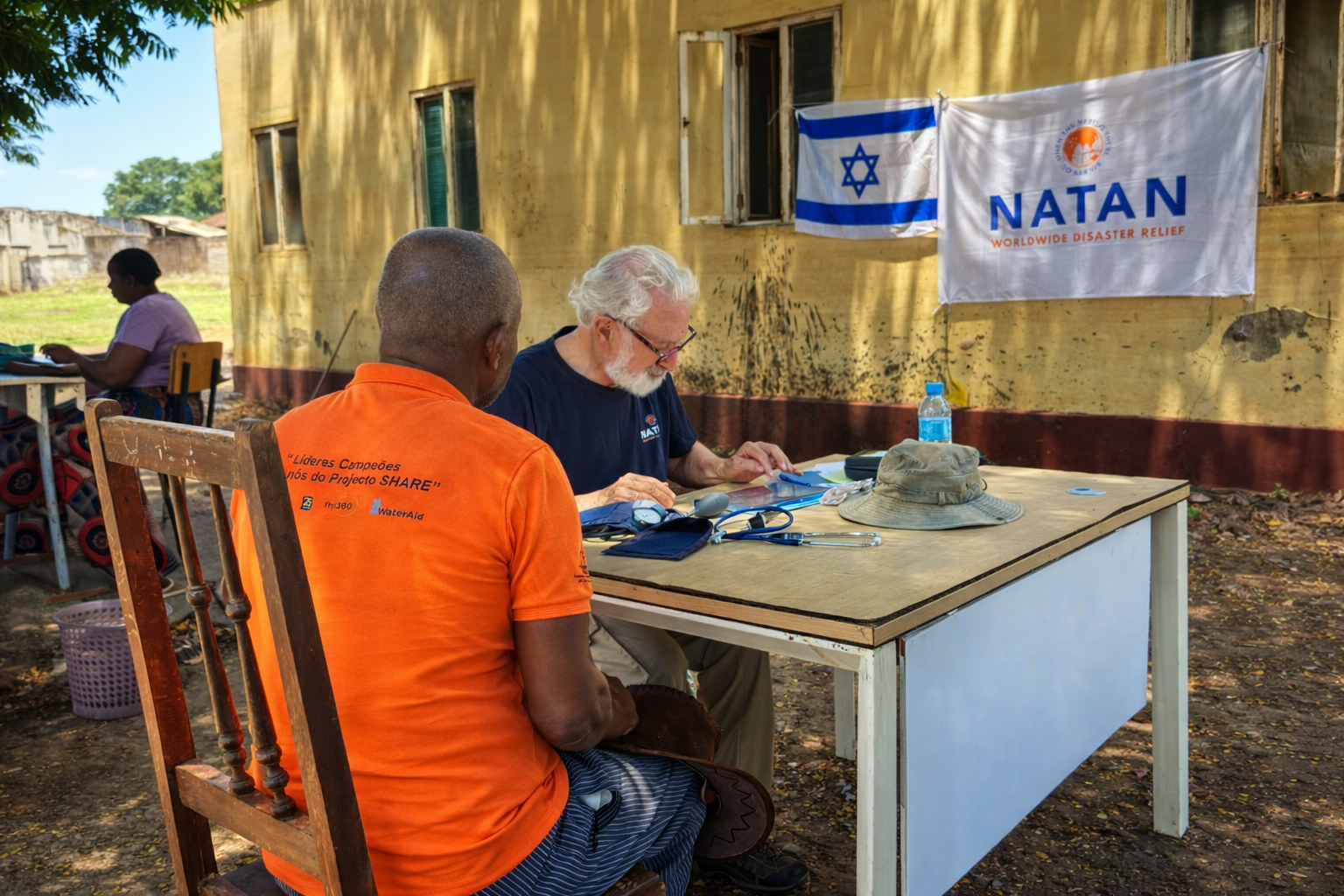
NATAN Worldwide Disaster Relief has deployed an emergency delegation to Mozambique following some of the most severe flooding the country has experienced in recent years. The disaster has affected more than 800,000 people and displaced over 100,000 across several provinces, leaving communities in urgent need of medical and psychosocial support.
On arrival, NATAN teams established a fixed clinic and multiple mobile units to reach flood-affected communities with essential healthcare services. Working side by side with local professionals, the teams are delivering rapid triage, urgent treatment, and both primary and routine care. Beyond direct patient care, NATAN is strengthening the capacity of hospitals and community clinics—sharing clinical knowledge and supporting the recovery of Mozambique’s health infrastructure.
In parallel, NATAN’s mental health professionals are working closely with local leaders and practitioners to create sustainable, community-based support systems. Together, they are assessing needs, co-developing culturally responsive interventions, and fostering safe spaces where individuals and families can begin to heal. Activities include group therapy sessions, resilience workshops, community communication initiatives, and training local providers in trauma-informed care that can be carried forward long after the emergency phase ends.
“Medical and psychosocial relief is often the first step in helping communities stand back on their feet,” said Alice Miller, CEO of NATAN Worldwide Disaster Relief. “Providing reliable, professional healthcare in the immediate aftermath gives people dignity, reassurance, and the confidence that recovery is possible.”
This mission follows NATAN’s earlier deployment to Mozambique in 2019, after Cyclone Idai devastated the region. Over two months, NATAN’s teams reached remote, flooded villages by helicopter, providing emergency medical aid, clean water, and vital mental health support in UN displacement camps. By training local social workers and students in trauma recovery, NATAN helped ensure that the healing process could continue long after the emergency response ended.