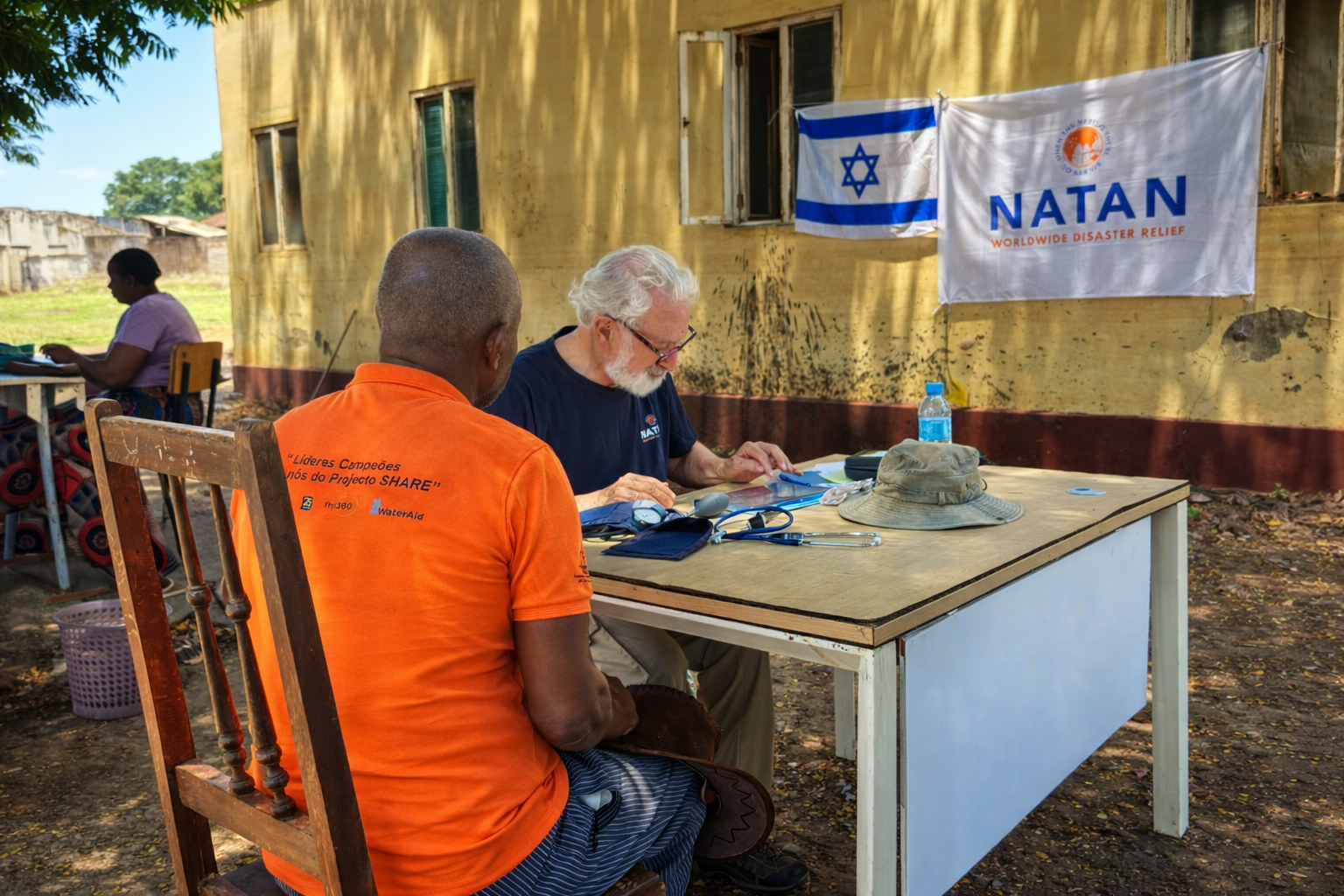
Disaster relief is rarely a one-time event. It is a commitment to a community’s long-term survival and dignity. In 2026, NATAN Worldwide Disaster Relief once again finds itself on the ground in Mozambique, responding to some of the most severe flooding the nation has ever faced.
While the current mission is urgent, it is deeply rooted in the lessons learned and the bonds formed during NATAN’s pivotal 2019 deployment following the catastrophic Cyclone Idai.
2026: A Rapid Response to Rising Tides
The current situation in Mozambique is critical. With over 800,000 people affected and 100,000 displaced, the health infrastructure is under immense strain. NATAN’s 2026 delegation has moved swiftly to address two primary fronts: Physical Health and Mental Resilience.
Integrated Healthcare
NATAN has established a hub-and-spoke medical model to maximize reach:
-
Fixed Clinics: Providing a stable point of care for those in high-density displaced populations.
-
Mobile Units: Reaching isolated communities where roads have been swallowed by floodwaters.
-
Capacity Building: Instead of working in a vacuum, NATAN teams work alongside local professionals, sharing clinical knowledge to ensure the health system grows stronger even amidst the crisis.
Sustainable Mental Health
Psychosocial support is not just about immediate comfort; it is about long-term recovery. NATAN’s mental health professionals are currently:
-
Developing culturally responsive interventions with local leaders.
-
Hosting resilience workshops and group therapy.
-
Training local providers in trauma-informed care, ensuring the support system remains functional long after the international teams depart.
“Providing reliable, professional healthcare in the immediate aftermath gives people dignity, reassurance, and the confidence that recovery is possible.” — Alice Miller, CEO of NATAN
2019: Looking Back at the Anatomy of an Aid Operation
To understand NATAN’s presence today, we must look back at 2019. Cyclone Idai was one of the worst weather disasters ever recorded in the Southern Hemisphere, leaving 1.7 million people affected.
The Challenges of Cyclone Idai
The storm made a direct hit on Beira, destroying electricity, water supplies, and telecommunications. The risk of waterborne diseases like cholera and malaria was astronomical.
The Impact of the 2019 Mission
-
Aero-Medical Aid: With roads impassable, NATAN teams joined volunteer helicopter pilots to find remote “island” villages. They treated over 200 patients in makeshift outdoor clinics for trauma, malnutrition, and infections.
-
WASH (Water, Sanitation, and Hygiene): Clean water is the barrier between life and death. NATAN deployed the NUF water filter system, a manual pump capable of purifying 500 liters of water per hour without electricity.
-
The “Train the Trainer” Model: In 2019, NATAN partnered with the Universidade Pedagógica in Beira. By training students and social workers in psychosocial counseling, they planted the seeds of resilience that continue to bear fruit today.
A Legacy of Solidarity
The 2026 mission is a testament to NATAN’s philosophy: Relief is the first step toward standing back up.
Whether it is filtering water in 2019 or establishing mobile clinics in 2026, the goal remains the same: to provide professional aid that respects the dignity of the survivors and empowers local communities to lead their own recovery.